
Table of Contents
All Properties of Silk Fiber in Textile
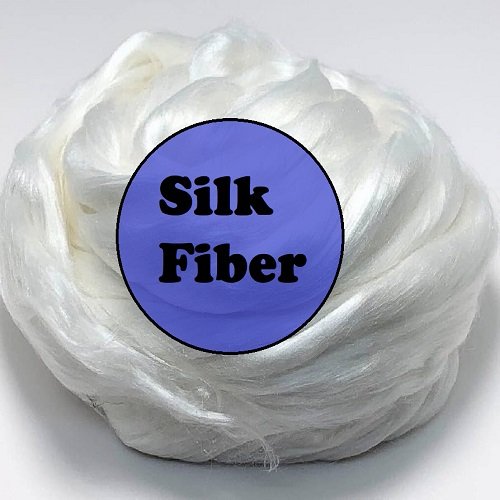
What is Silk Fiber in Textile?
Like wool fiber, silk fiber is an animal fiber. But instead of being grown in the form of hair, it is produced by insects as a handy material with which to build their webs, cacoons and climbing ropes. Almost the entire commercial silk industry is based on one insect-the silkworm. In spite of its name, this is really a caterpillar; the silk is made by it when it wants to change into a chrysalis and then a moth. It spins the silk and wraps the fiber round itself in the form of a cacoon inside which it can settle down in comfort.
For three thousand years, China held a monopoly in the silk industry. Then sericulture – as silk production is called-spread to Japan via Korea. Gradually, silk production spread westwards over Asia. Many tales are told of the ways in which the eggs of the silkworm and the seeds of the mulberry tree on which it fed were smuggled from one country to another. According to legend, they were carried to India by a princess who concealed them in her head-dress.
Types of Silk Fiber in Textile
In textile industry, silk are classified into below two types:
- Cultivated silk,
- Wild silk.
Cultivated silk is better than wild silk.
Physical Properties of Silk Fiber in Textile Industry
The major physical characteristics of silk fiber have described in the following with their explanations:
1. Length
Silk fiber length varies from 400 to 700 meters.
2. Fineness
Silk is a very fine fiber. Its fineness varies from 11 to 12 microns.
3. Cross-section
Its cross-section is triangular.
4. Strength
Strength of silk fiber is reasonably good. Its tenacity varies from 2.4 to 5.1 gram per denier.
5. Stretch and Elasticity
Extensibility is 15% when at break. Recovery from stretch is 90% when extension is up to 2%.
6. Resiliency
Resiliency of silk fiber is moderate.
7. Abrasion Resistance
Its abrasion resistance is reasonably good.
8. Moisture Regain
Moisture regain of silk fiber is 11%.
9. Biological Properties
Normally, silk fiber is unaffected by fungus, moths and insects.
10. Flammability
Its burn slowly when contact with flame. Silk fiber also self-extinguishes.
11. Electrical and Thermal Conductivity
Heat and current flow rate is low.
Chemical Properties of Silk Fiber in Textile
All the chemical characteristics of silk fiber have explained in the below:
1. Effect of Bleaches
Damages by the effects of strong bleaching agents. Hence, perfectly while silk fabric is not seen.
2. Effect of Acid and Alkali
Strong mineral acid damages silk fiber and strong alkali also damages silk.
3. Effect of Organic Solvent
Silk is unaffected by the organic solvent hence dry cleaning is safe.
4. Dye-Ability
Dyeing at low temperature by direct, acid, basic, vat and reactive dyes could be done.
Uses of Silk Fiber in Textile
There are so many uses of silk fiber in textile and apparel manufacturing industry. Silk fiber is widely used all over the world. It is used for children’s wear, ladies wears, tie, suits etc. purposes.
Pingback: Major Chemical Properties of Silk Fiber in Textile Industry - Textile Tutorial