
Table of Contents
What is Technical Textiles?
Technical textiles are approximately 21% of all textiles. In this modern era, technical textile plays a vital role in the manufacturing industries. It is used not only in the textile sector but also in other manufacturing sectors like the medical sector, engineering sector, etc. There are different types of technical textile and the main markets of technical textiles are traditional fabrics such as
- Canvas, fents, etc. (23%),
- Automotive and transportation (23%),
- Leisure (12%),
- Medical textiles (10%),
- Geotextiles (10%), and
- Protective clothing (2%).
Two-thirds of automotive materials go into interior trim, for seat covers, roof and door liners, and carpets where woven fabrics still dominate the other uses include types, airbags, and filters.
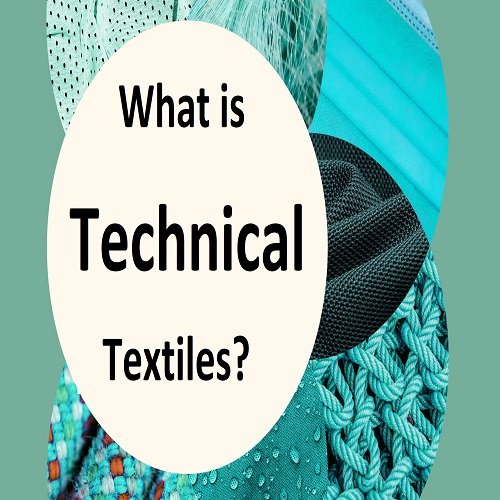
Although non-woven and woven fabrics account for the majority of technical textiles, warp-knitted, and to a lesser extent, weft-knitted structures have captured some special end-use markets. These are particulars where certain properties such as drapability, openwork, knitting to shape, mouldability, extensibility, lightness of weight, strength, and cost are at a premium and can be tailored for requirements.
Different Applications of Technical Textiles
There are some important applications of technical textiles which have pointed out the below:
1. Geotextiles
These are polymer fabrics used in the construction of harbor works, road drains, and breakwaters and for land reclamation, and many other civil engineering purposes. The geotextiles market requires bulk quantities of material.
2. Tarpaulins Coverings
Air inflated structures, tarpaulins, temperature resistant sails, root coverings, backbit advertising signs.
3. Industrial Textiles
Filter fabrics, adhesrttapses, and conveyor belts.
4. Safely Textiles
Heat and flame resistant protective clothing for civil and military purposes, inflatable life rafts, fluorescent safely clothing, and bulletproof bests, sun protection blinds, helmets, radiation protection, oil trap mats, and parachutes.
5. Medical Textiles
Gauge, plasters, artificial arteries, tapes, bandages, classier net bandages, dialysis filters, blankets, and covers.
6. Composites
Composites are products that are formed by combining two or more discrete physical phases usually a solid matrix and a fibrous reinforcing material.
7. Nets
Fabrics for construction, agriculture, weather, and pest protection, for safety, blinds, fences, fishnets, and storage nets.
8. Active Sportswear
Clothing and equipment.