
Table of Contents
Impact of Leadership On Apparel Productivity
It is generally said that one of the major differences that sets successful organizations apart from unsuccessful ones is the presence of effective leadership. A successful organization with ordinary and poor quality managers is unthinkable. Actually a situation like that does not exist. Leadership is defined as some traits or qualities that can influence and inspire people to strive willingly to achieve organizational goals. Thus managers or business leaders under congenial environment can have his people motivated.
You may follow Production Officer Role in Textile and Apparel Industry
Essential Characteristics of a Good Leader
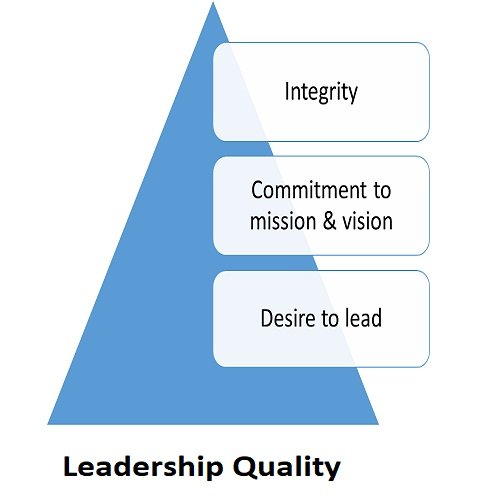
Managers & supervisory personnel should have the below qualities:
- Drive: Achievement, ambition, energy, tenacity, initiative.
- Honesty & integrity,
- Self-confidence (Including emotional stability),
- Cognitive ability,
- Knowledge of the business,
- Other traits like charisma, creativity, originally, flexibility etc.
You may follow Importance of Employee Training in Textile and Apparel Workplace
Gary A. Yukl found the below traits to be features of a successful managers or leaders.
| SL No. | Trait | Skill |
| 01 | Adaptable to situations | Clever (Intelligent) |
| 02 | Alert to social environment | Conceptually skilled |
| 03 | Ambitious & achievement | Creative |
| 04 | Assertive | Diplomatic & tactful |
| 05 | Cooperative | Fluent in speaking |
| 06 | Decisive | Knowledgeable about group task |
| 07 | Dependable | Organized |
| 08 | Dominant | Persuasive |
| 09 | Energetic (High activity level) | Socially skilled |
| 10 | Persistent | |
| 11 | Self-confident | |
| 12 | Tolerant of stress | |
| 13 | Willing to assume responsibility |
Warren Bennis after four years of research identified four major areas of competence shared by some of the most competent leaders:
You may follow Effect of Employee Turnover on Apparel Productivity and Solution for It
1. Management of Attention
This is a capability of leaders to infuse a sense of outcome, goal, direction that influence followers.
2. Management of Meaning
This is an ability to communicate meaning with clarity & understanding to the followers and subordinates.
3. Management of Trust
The ability to be trustworthy & reliable.
4. Management of Self
The ability to know one’s strength & weakness & to use one’s skill within that limit.
You may follow Safety Measures in Textile and Apparel Industry
What are the Qualities of a Bad Leader?
There are some traits which can erode leadership qualities such as the following:
- Insensitive to others: Abrasive, intimidating, bullying style etc.
- Cold, aloof, arrogant.
- Unreliable, untrustworthy.
- Overly ambitious: Always thinking of self-advancement, playing policies.
- Having specific performance problems with the business.
- Unable to deligate power to others or build a team overmanning.
- Unable to staff effectively.
- Unable to think strategically.
- Unable to adapt to boss with different style.
- Over dependent on advocate or mentor etc.
You may follow Relationship Between Teamwork and Apparel Productivity
Leadership Styles and Their Impact on Employee Productivity
How effective leadership leads to better performance & higher organizational effectiveness is well illustrated by the so called Path-Goal Theory which is related to Expectancy Model of Motivation Theories. Expectancy Theory maintains that employees are motivated to do that job against which there is reward and if that reward is expected to satisfy them.
You may follow Importance of Compliance for Higher Apparel Productivity
The following diagram shows how this leads to better organizational performance
- Leader defines what followers must do to attain organizational goals →→ Leader clarifies followers work role →→ Follower gains increased knowledge & confidence to accomplish the outcomes →→ Follower increases efforts & motivation→→ Organizational goal is attained.
- Leader learns follower’s needs →→ Leader matches the needs to rewards if goal is attained →→ leader increases value of work outcomes →→ Follower increases efforts & motivation→→ Organizational goal is attained.
You may follow Duties or Role of Apparel Production Manager Before Starting Production
Researchers of Ohio & Michigan Universities grouped leadership behavior into task-oriented & employee oriented. Task oriented behavior emphasizes activities towards achievement of organizational goals while employee oriented behavior highlights better relationship with the subordinates, respecting their ideas & feelings and establishing mutual trust. The first group represents authoritarian styles while the latter represents democratic style of leadership.
A right leadership quality is to strike a balance so that employee relationship becomes a helping hand in achieving organizational goals.
Pingback: Importance of Benchmarking in Textile and Apparel Business - Textile Tutorial